Moni Singh got involved in his school days in Kolkata with revolutionary activities. He joined the secret Anushilan Samiti and waged armed struggle against British imperialism. In 1921, an arrest warrant was issued against him. While living in hiding, he was indoctrinated with the idea of communism. In 1925 he joined the Indian Communist Party at the very seminal stage of the communist movement.
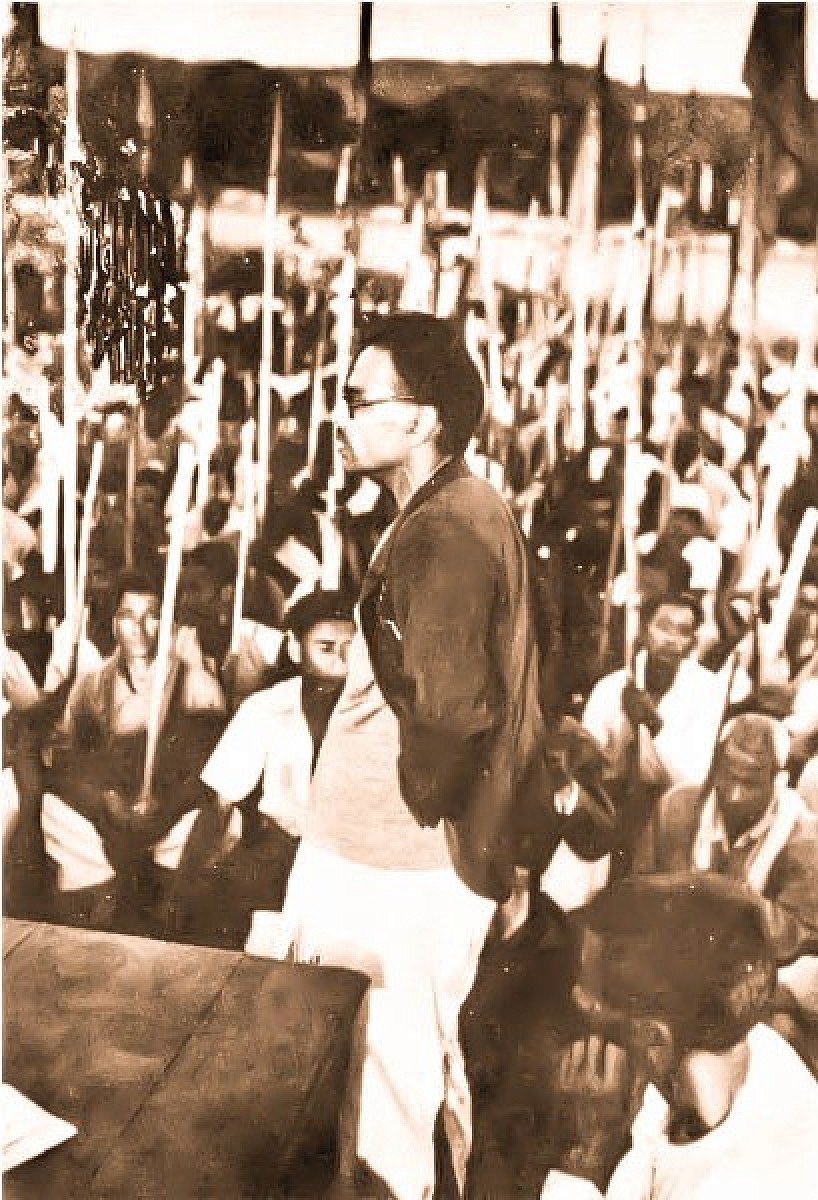
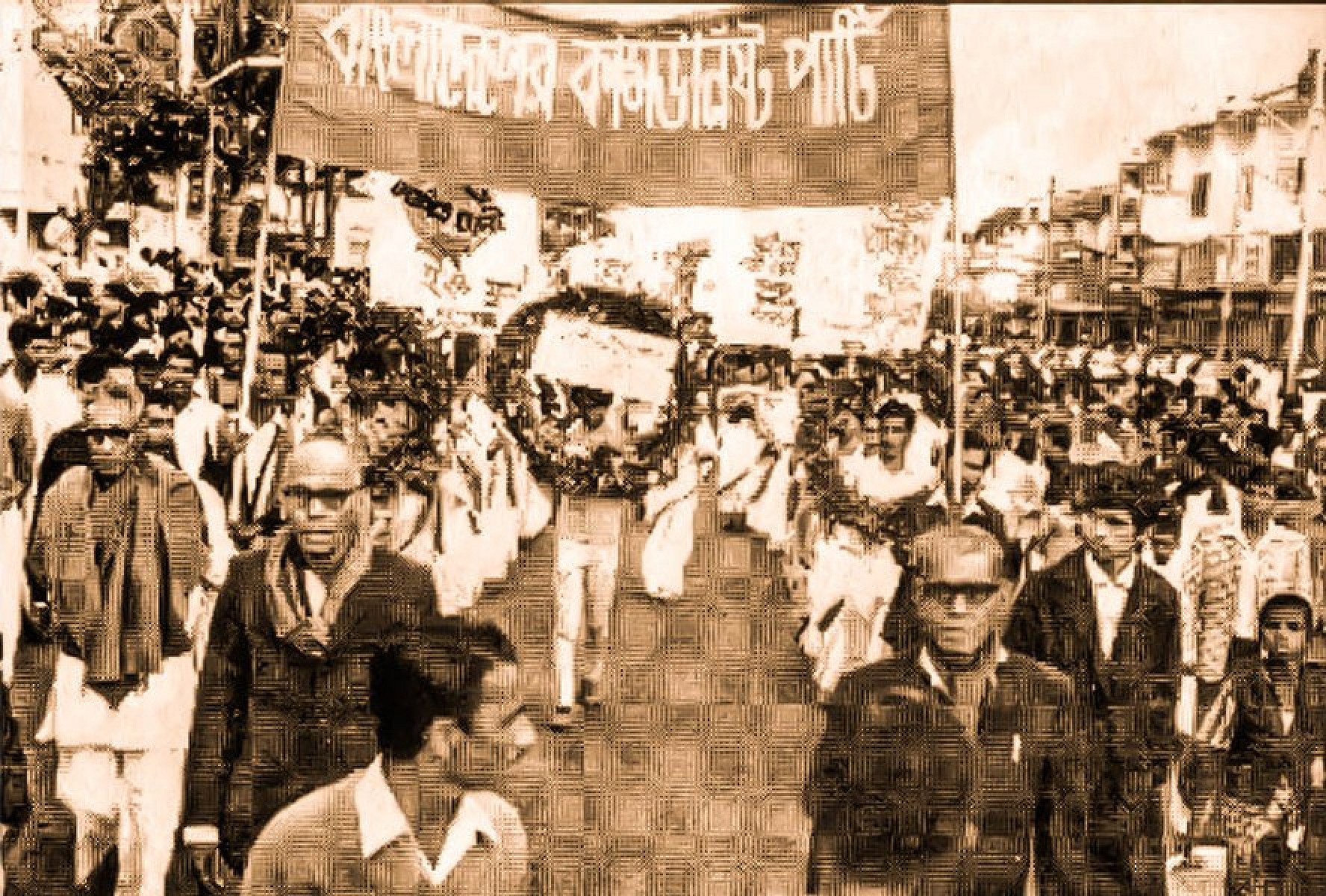
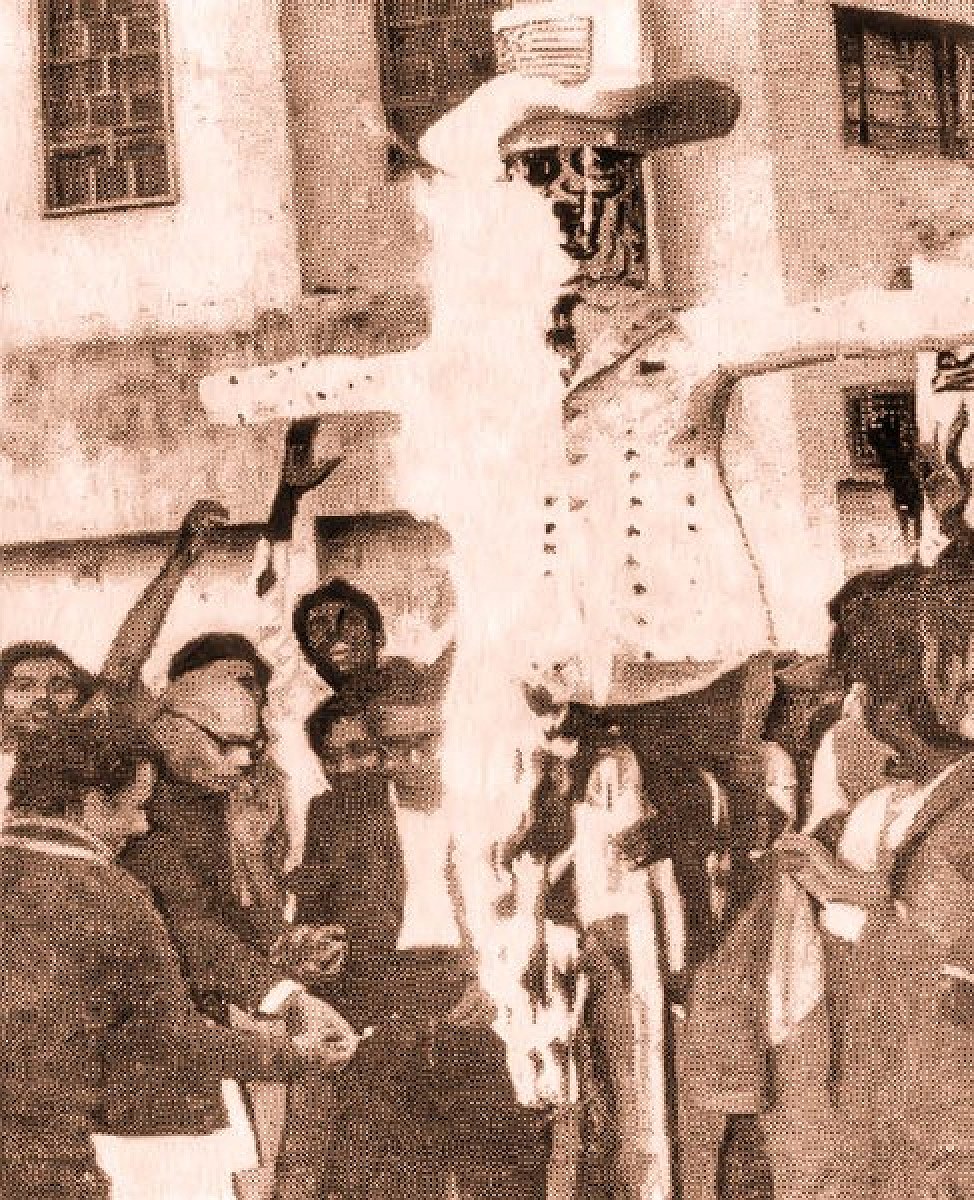
The spirit of ‘Khilafat Movement’ and ‘Non-Cooperation Movement’ against British Raj highly influenced young Moni Singh. Consequently, he became one of those young revolutionaries who took the risk of life to free the country from British colonialism.
The British government of that time declared arrest warrant against Moni Singh and other revolutionaries. At that time this type of arrest warrant was equivalent of capital punishment since the British colonial rulers considered that democratic struggle for freedom equivalent to treason. Bearing this arrest warrant young Moni Singh continued tireless political campaign all over the country for freedom and self-determination.
In 1921 he simultaneously organized peasant movement in his own locality of Susang Durgapur and labor movement in Kolkata.
In 1928 Moni Singh dedicated himself as a full-time activist of the Communist Party and closely involved with trade union movement in Kolkata. His vibrant role in this struggle made him an enemy of the ruling class and he was imprisoned for five years in 9th May of 1930. He was released from jail in 1935 but remained house-arrest till 1937 in his maternal home Susang Durgapur.
Being an outstanding leader of oppressed people Moni Singh never stopped, during his captive-time in Susang Durgapur he again started mobilizing peasants and Khetmajur(agricultural workers) to protect their rights. This time his maternal uncles, who were the zamindars (landlords) of Susang Durgapur became his opposition.
Despite strong obstacle from own family revolutionary Moni Singh courageously stood for the just cause of rural poor. This made him a well-known peasant’s leader of that area. During that time he was imprisoned again for one and a half years for demanding a fair price for jute.
He was given the membership of the Communist Party after his release from jail in 1937. Then he decided to restart trade union movement in Kolkata but indigenous communities of Susang Durgapur like ‘Garo’ and ‘Hajong’ seriously requested him not to move Kolkata but to start a movement against ‘Tanka system’ (a coercive taxation on peasants by local landlords).
Comrade Moni Singh could not ignore this appeal from the rural poor. He wholeheartedly concentrated his activity on ‘anti-Tanka movement’ and became the unanimous leader of this movement. When this movement went its peak level Moni Singh was again arrested in 1941.
In 1944 he was elected as member of the presidium of the Bengal Provincial Kisan Sabha (peasants’ association). In 1945, as a Chairman of reception committee of All India Kisan Sabha conference in Netrokona he played a significant role to enhance peasant movement of undivided Bengal. Renowned politicians Comrade Muzaffar Ahmad, Comrade Harkishan Singh Surjeet, Lily Jogi and many other leaders participated in this conference.
British colonialism defeated but left behind its residuals, from that debris communalism erupted and so-called two-nation theory evolved, which led to the creation of religion-based Pakistan. Moni Singh and many of his fellow comrades did not accept so-called ‘two nation theory’.
They continued the struggle for secularism and socialism. Consequently, Pakistani authority declared Communist Party and him outlaw and issued an arrest warrant. It also announced a reward of Tk 10,000 for his arrest.
This difficulty compelled Moni Singh to remain underground and thus he had to stay underground about 20 years since the inception of Pakistan.
Despite this repression, Comrade Moni Singh played a pivotal role against Pakistani military autocratic regime. In this difficult period, in 1951, the banned Communist Party held its 2nd National Conference and Moni Singh was elected General Secretary and subsequently in 3rd Conference he again reelected at the same position.
In 1968 he was arrested by Pakistani authority and released in 1969 by the mass upsurge but again arrested in the same year. When the Liberation war began in 1971 prisoners broke Rajshahi jail and freed Comrade Moni Singh.
At the time of Liberation war, Comrade Moni Singh organized freedom fighters, helped establish the special guerrilla force of NAP, CPB and Chhatra Union. He also made remarkable contribution to organizing support from the Soviet Union and Socialist countries in favor of our liberation war of 1971. He was made a member of the Advisory Council of the Mujibnagar government.
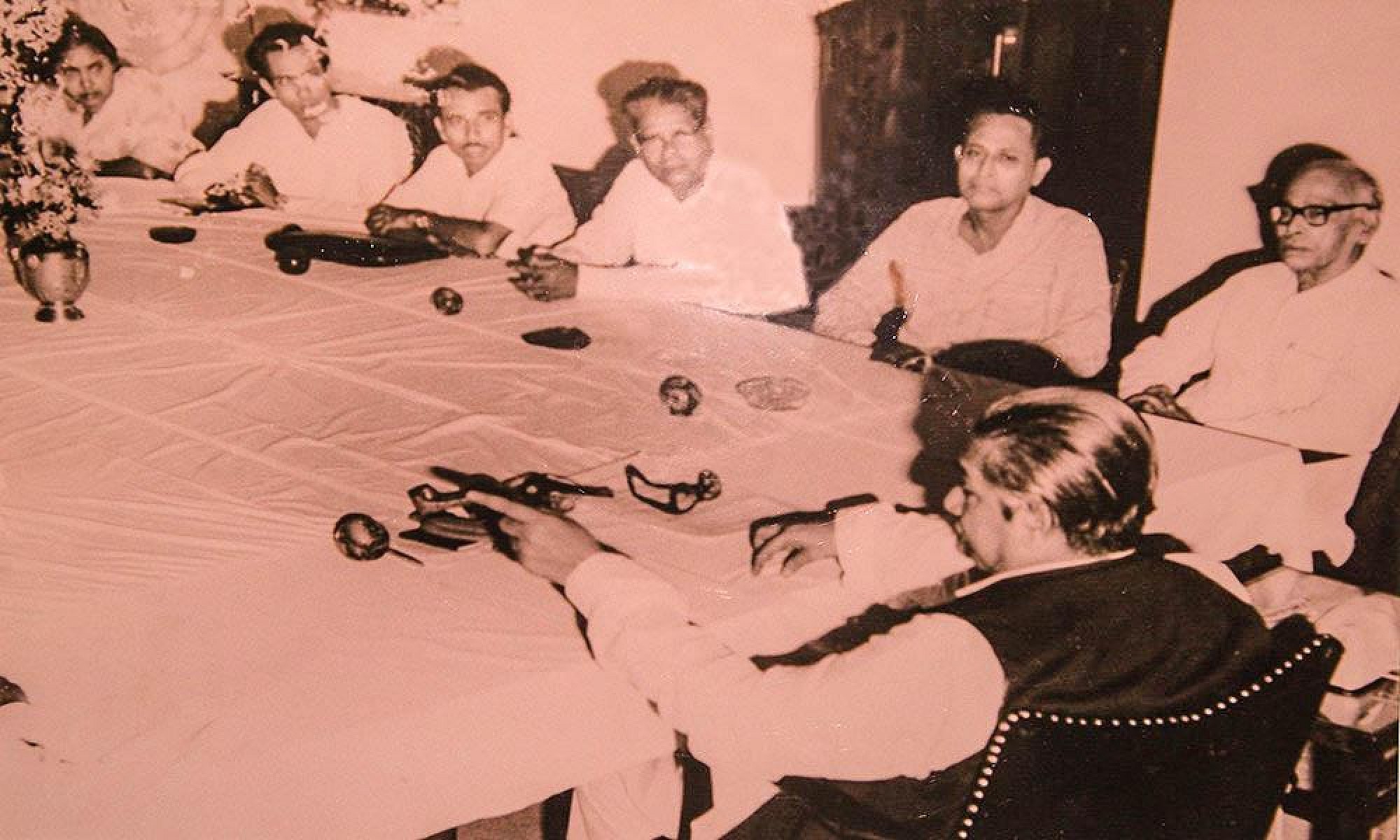
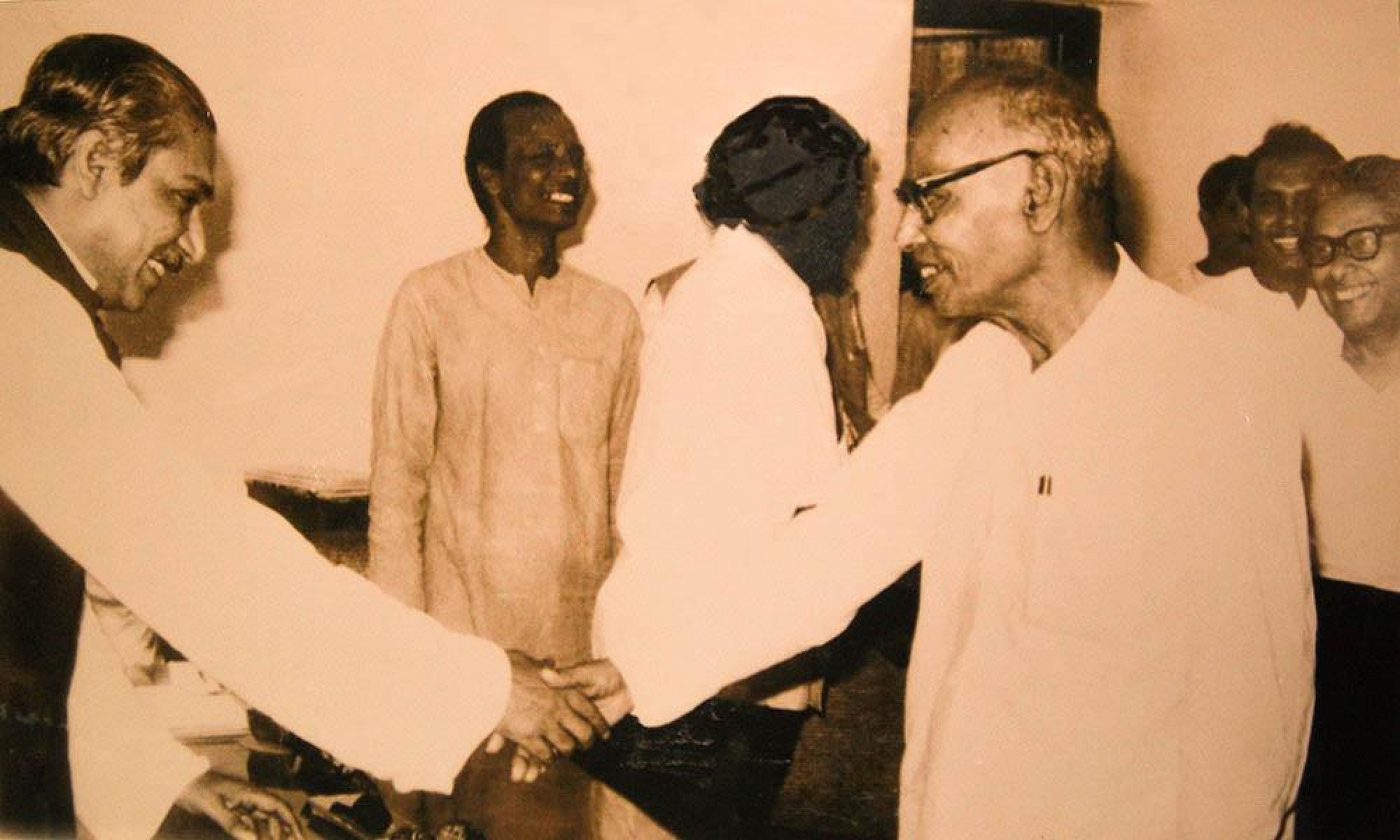
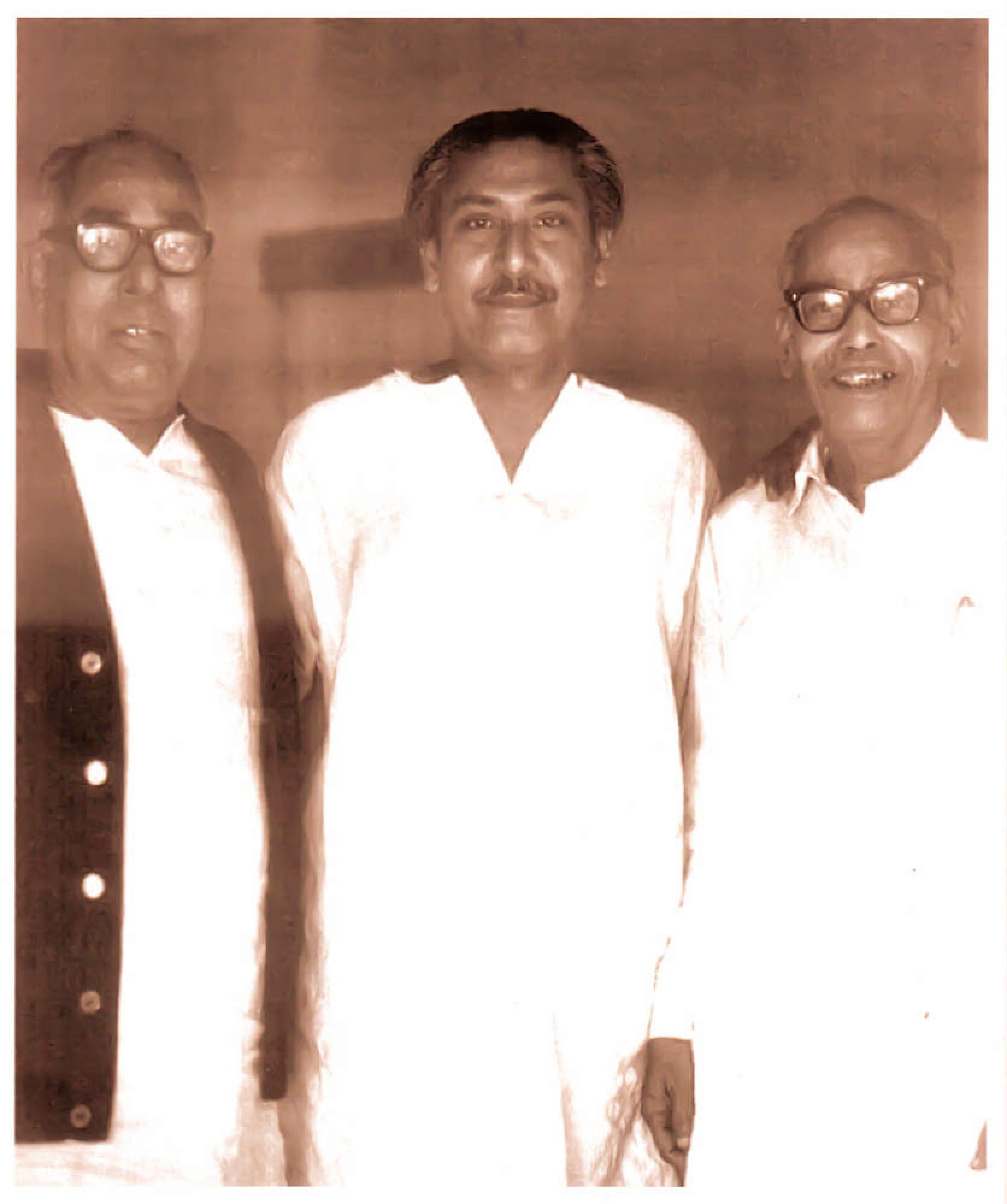
In the Independent Bangladesh, he continued the struggle for establishing democracy and exploitation-free society. For this reason, he criticized some wrong policies of Bangabandhu Sheikh Mujibur Rahman which practically benefited reactionary forces. Comrade Moni Singh was elected as the President of the Communist Party of Bangladesh in 2nd Congress (national conference) in 1973 and subsequently in 3rd Congress in 1980.
After the assassination of Bangabandhu Sheikh Mujibur Rahman the Communist Party was declared illegal by the military government and during the military rule of Lt. Gen. Ziaur Rahman in the middle of 1977 Comrade Moni Singh was arrested again, in his mid-seventies. This legendary revolutionary remained politically active until he fell seriously ill on 23 February 1984, at the age of 82. He passed away on 31 December 1990.
Life of this revolutionary is yet a strong source of inspiration for all patriots of this country. His whole life is full of sacrifice and love for oppressed people. From British to Bangladeshi rulers, no rulers spared him. In spite of this severe repression, no one can sever patriotism from his struggling life.